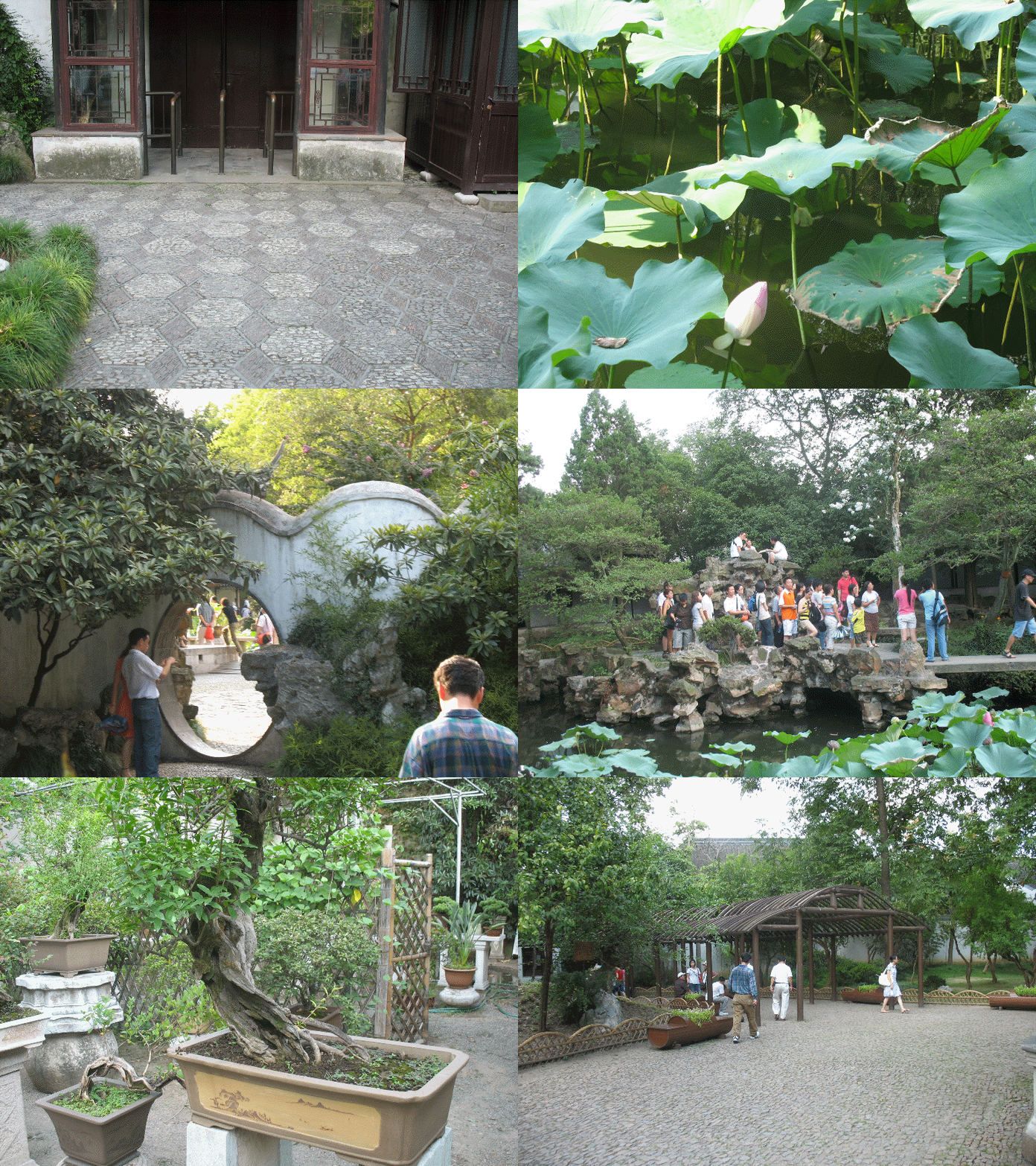
The beautiful waterside City of Suzhou (Zu-Show) in Jiangsu Province in South China is most famous for its elegant classical gardens. Among these, the Humble Administrator's Garden, covering about 52,000 sq. meters (12.85 acres), is the largest and most renowned. Due to its unique designs and ethereal beauty, the garden has garnered many special honors. It is listed as a World Cultural Heritage site and has also been designated as one of the Cultural Relics of National Importance under the Protection of the State as well as a Special Tourist Attraction of China.The Humble Administrator's Garden was originally built in 1509 during the Ming Dynasty (1368-1644). This was initially a private garden and villa of a former government servant named Wang Xianchen. the garden name came from a line in a Jin Dynasty poem: "Building a house and planting trees, watering the garden and selling vegetables constitute a humble administrator's business".
The not-so-humble administrator, Wang Xianchen, who, upon his retirement or demotion, depending on who you speak to, purchased the property with money extorted from other officials during his time at court.. According to garden scholars the name could also be translated to mean "Garden of the Unsuccessful Politician" or "Garden of the Stupid Officials".
After the death of Wang Xianchen, his son gambled away the property. The garden was created upon the old ruins of a residence and a temple. The garden frequently changed owners, each contributing his own vision. During the era of the Taiping Heavenly Kingdom in the mid 1800s, the Loyal Prince Li Xiucheng lived here.
It is home to a bonzai tree over 400 years old! (the middle Bonzi picture- Bonzi in the fancy rectangular pot.) |